First posted on PhillyH2o in 2009.
I learned about the Philadelphia Anglers Club when a member, Louis Cook, contacted me several years ago with questions about the history of fishing in Philadelphia. Louis thought it would be fun to share photos of club members and their catches, and you can view some of them here.
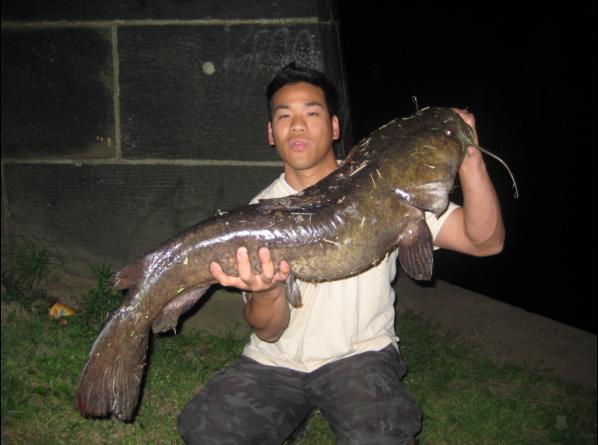
The photos amazed me. I had no idea that such large fish lived in the rivers around the city. Like many people, I suffered from a kind of “post-traumatic-sewage” syndrome, in which I believed that the sewage pollution which killed so much of the aquatic life in both rivers in the first half of the 20th century, still had a lingering effect today.
In fact, clean-up of the city’s two rivers, the Delaware and Schuylkill, began in the 1950s with the completion of the city’s three sewage treatment plants. The rivers have become steadily cleaner over the ensuing decades, thanks to the creation of the EPA and passage of the Clean Water Act in the 1970s, which enforced anti-pollution rules for industry and enforced ever-stricter standards for discharges from municipal sewage works. Today, the Philadelphia Water Department (besides its basic mandate to provide safe drinking water and effective sewage treatment) also has a mission to reduce the still-lingering sources of pollution in the city’s drinking water supply, still drawn from the Delaware and Schuylkill rivers.
The photos Louis shared, unless noted otherwise, show fish caught in the Schuylkill River, where close to 30 species of fish have been found. A few are invasive and destructive of other species (such as the flathead catfish and the snakehead); fortunately, other desirable species are also thriving, including the American shad, which has a long history in the region and which suffered greatly from both pollution and dam-building that blocked its migratory patterns.The Fairmount Fishway, at the Fairmount Dam in the Schuylkill River, opened in May 2009. Replacing the original fish ladder constructed in 1979, the specially-designed “fish passage facility” will make it easier for migratory fish to make their way upriver.
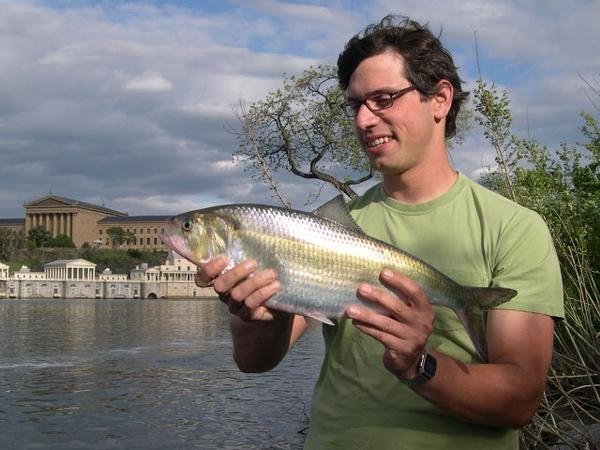
PAC members do not eat their catches, but gently release the fish back into the rivers and streams where they caught them. Partly this is because of the health risks from eating fish caught in urban streams. The Pennsylvania Fish and Boat Commission regularly updates its fish consumption advisory. Please take it seriously! Many fish can be contaiminated with mercury and other harmful things. Louis Cook says that the commonly-held idea – that keeping a fish in a bathtub overnight will cleanse its flesh of the accumulated chemicals and toxins that took a lifetime to accumulate – just isn’t true.
Anglers also release fish because there are many more people than fish in the city, and Cook believes that if more and more people start eating them, the fish populations will start to decline. By releasing their catches, PAC members also allow others to catch the same fish again. To see some of Louis Cook’s photographs documenting these recatches, click here.