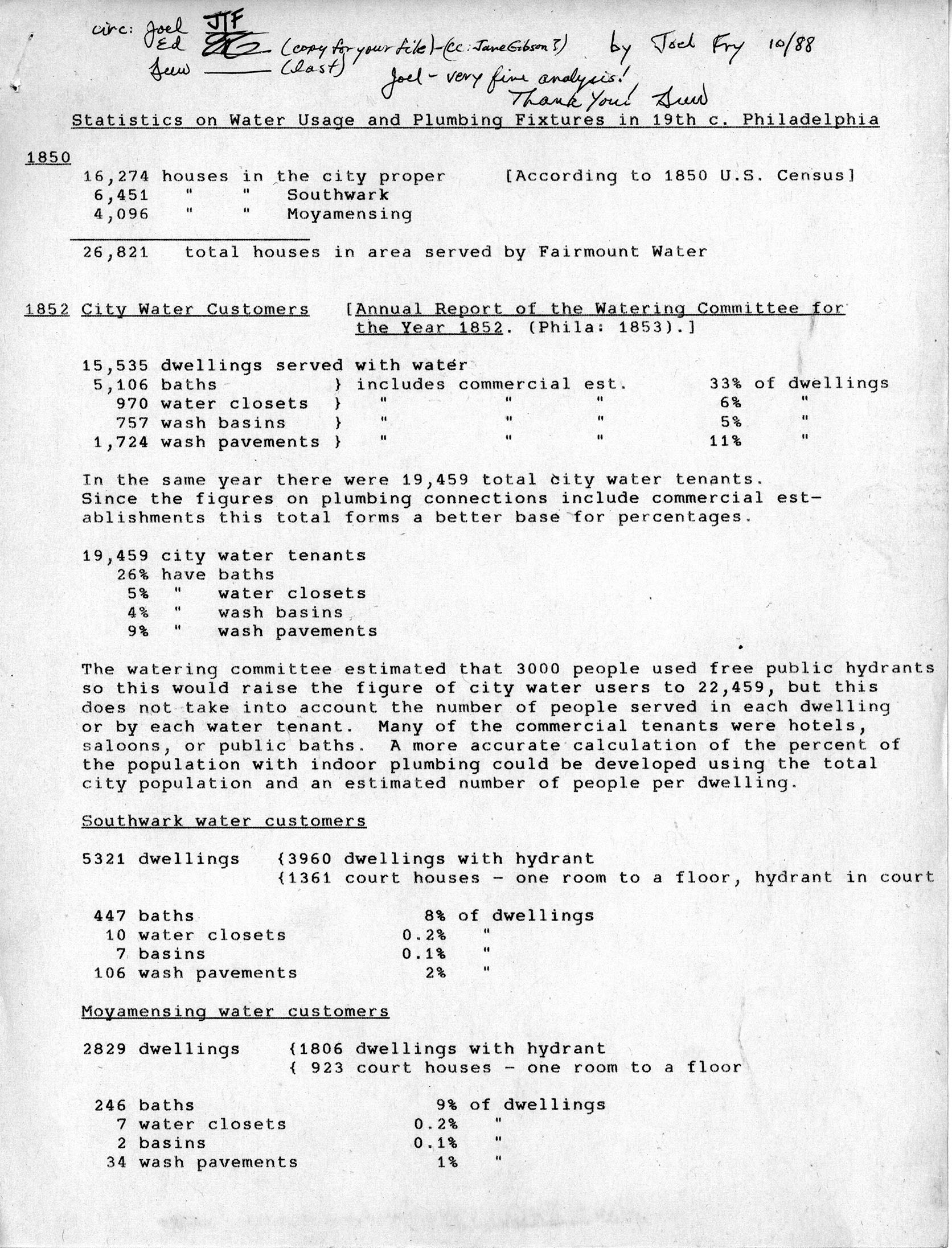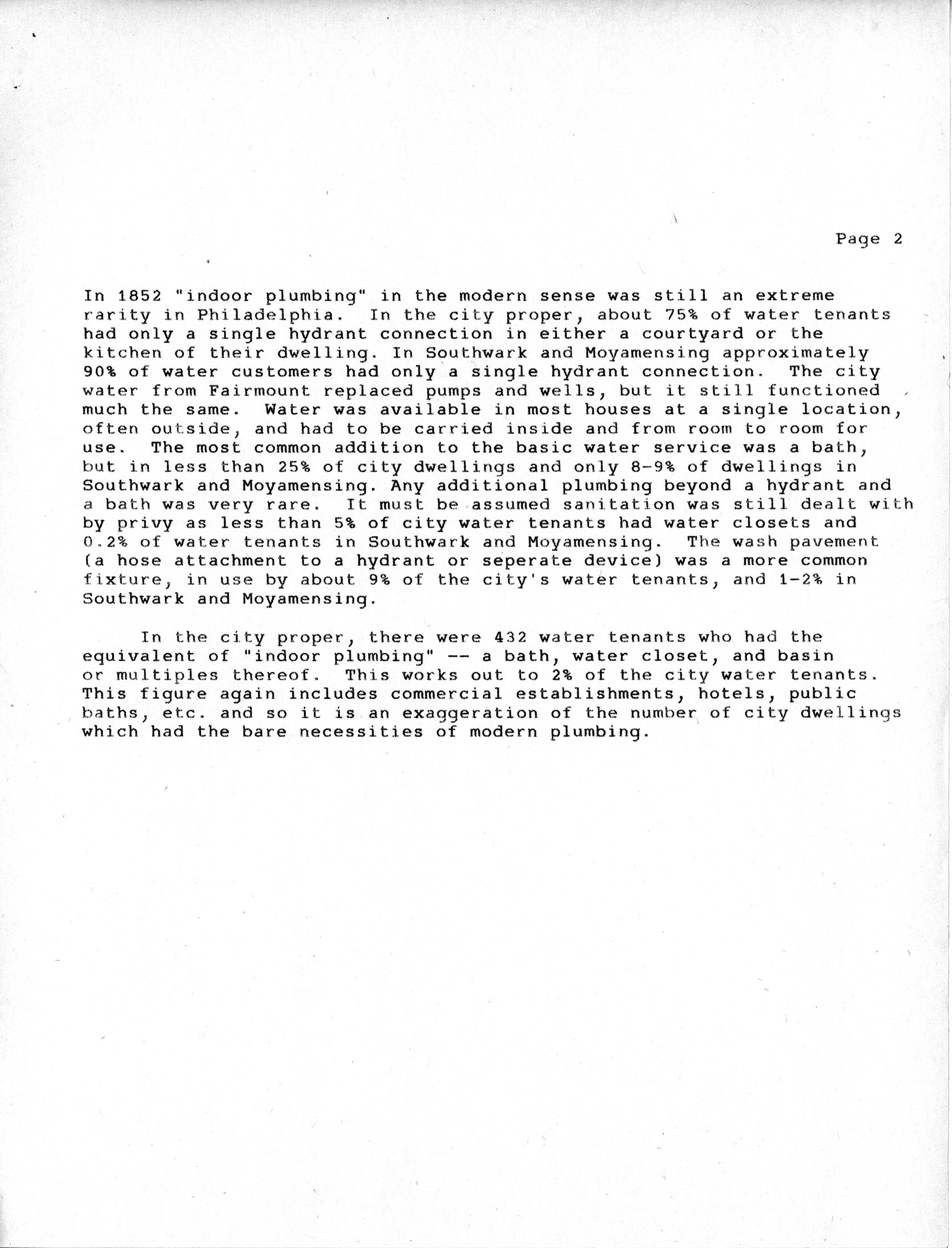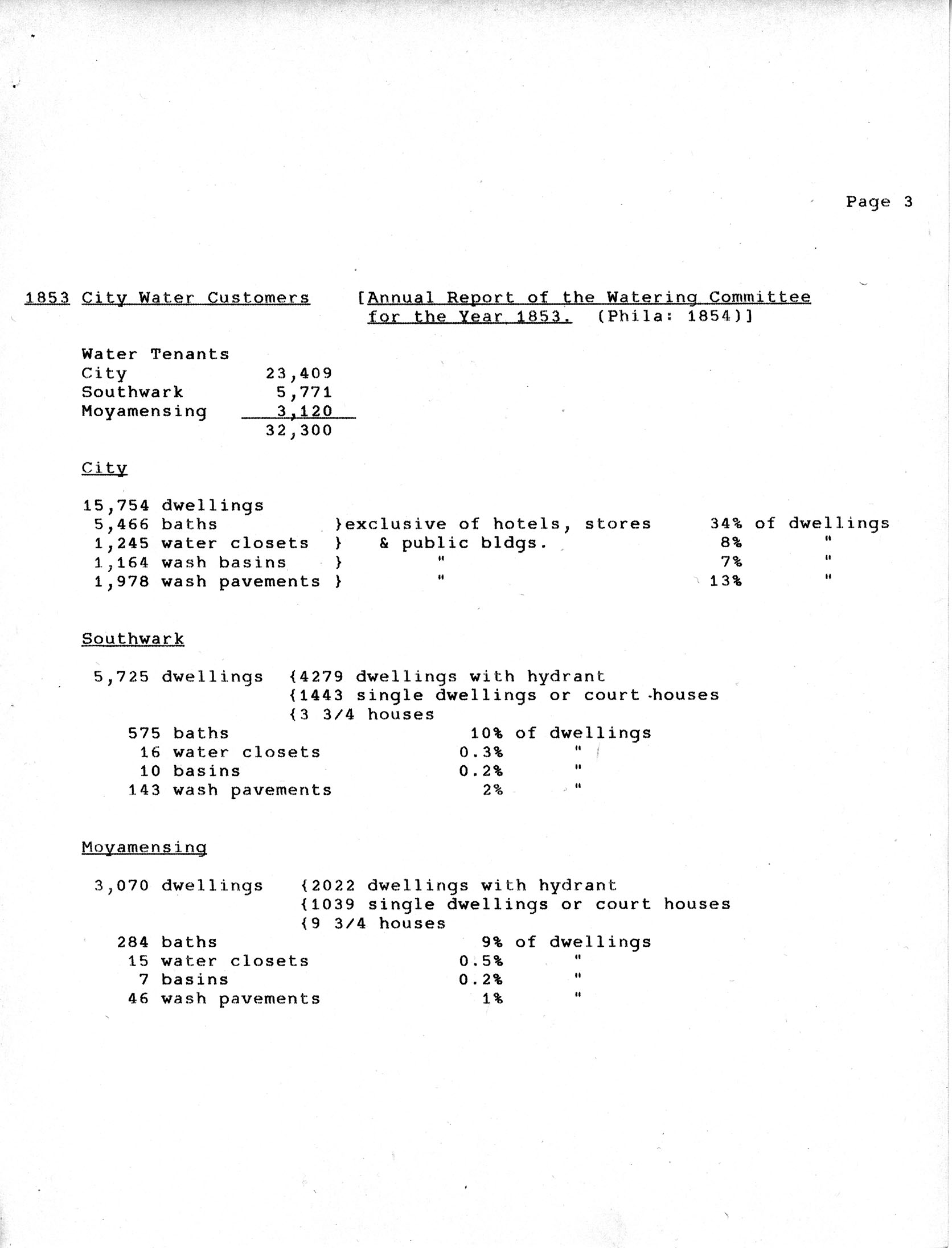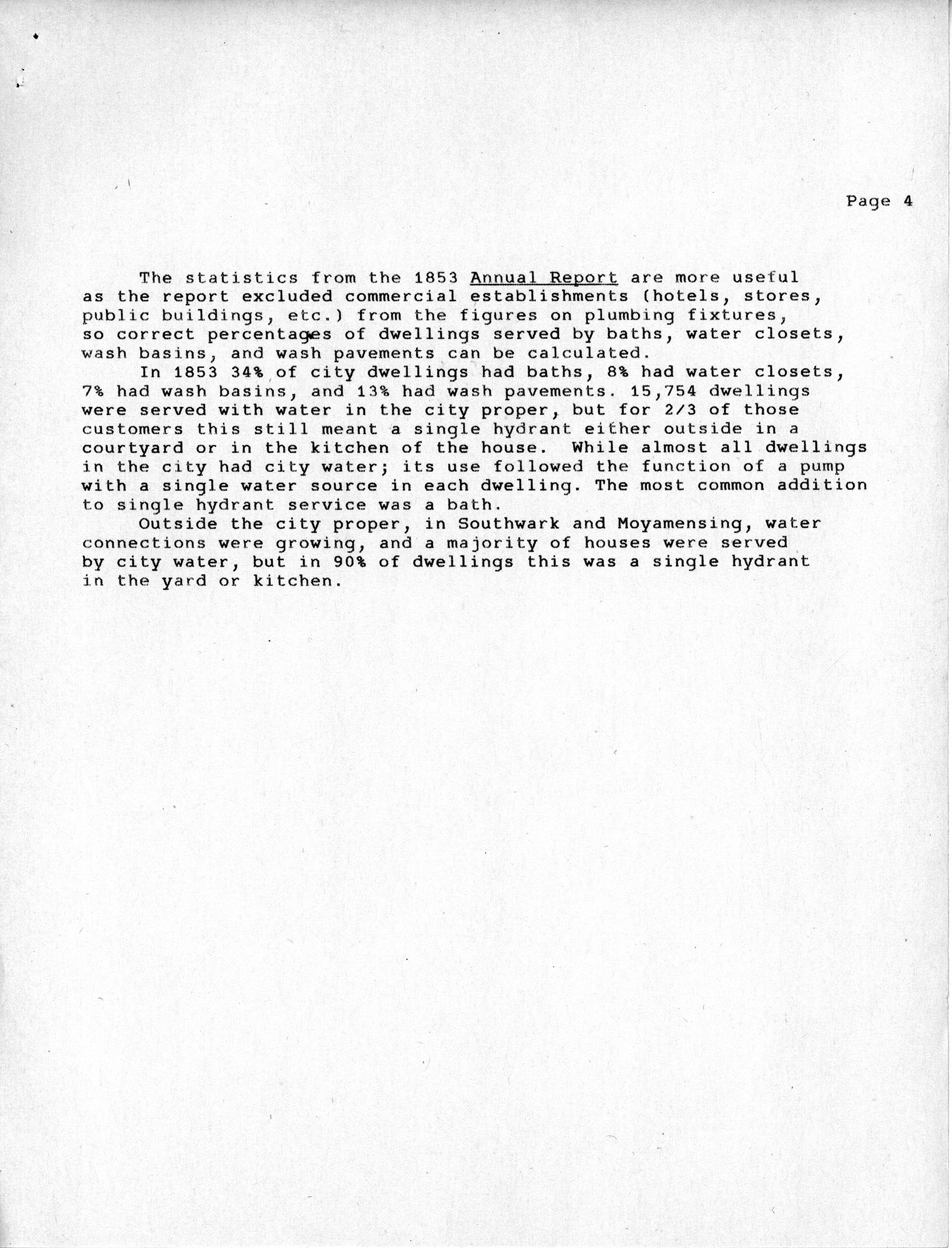
Joel Fry, who died earlier this year, is best known in Philadelphia historical circles as the long time curator of Bartram’s Garden, the 18th-century home and garden of the eminent colonial botanist, John Bartram. But in 1988, Joel was working as a summer intern for the Philadelphia Water Department, looking into various aspects of the city’s early water system. I remember coming across the report below when I first began my own work for PWD, and thinking then how useful and illuminating it was. Joel titled the 4-page typescript “Statistics on Water Usage and Plumbing Fixtures in 19th c. Philadelphia.” To me, the most surprising takeway from this research is how rare indoor plumbing was in the city, 50 years after the municipal water supply was introducted in 1801.
I’m presenting these statistics as Joel compiled them. While I have not fact-checked this document, I trust that the younger Joel was as meticulous as the older Joel, who I got to know a little at the end of his life. Bartram’s Garden has posted a memorial page in honor of Joel, where you can learn more about his life and read some of his more substantial research.
Because of the way the report was formatted, it would have been too time-consuming to reproduce it in text on this page. You can view the page images of this report below, or download a PDF. If anyone knows of more recent, or more thorough, research into the use of water in 19th century Philadelphia, please let me know so I can post it here.